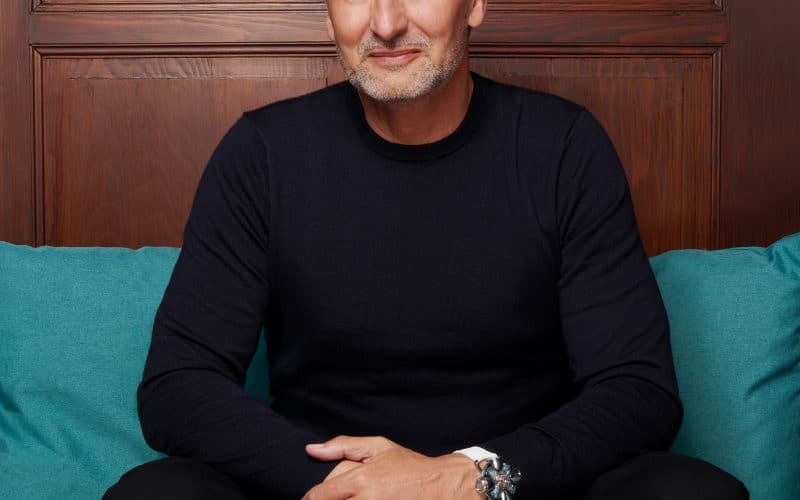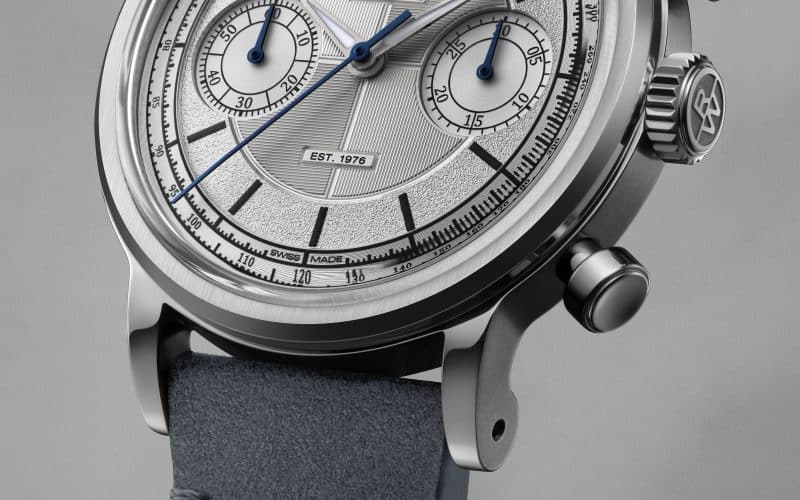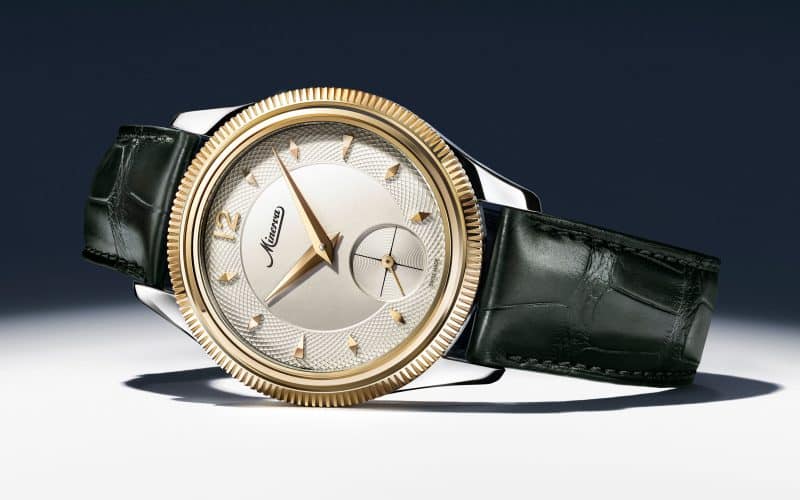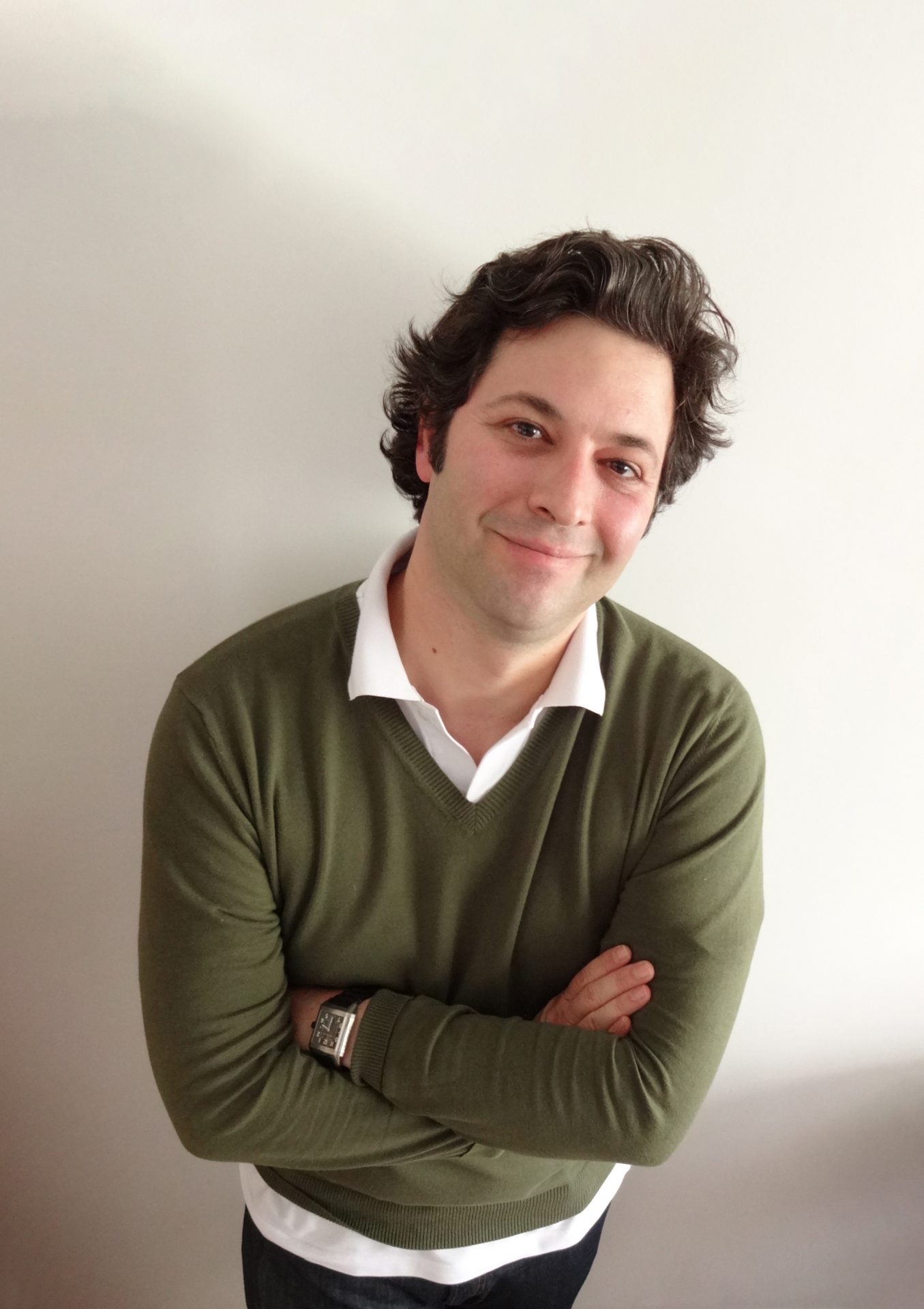


Max Büsser has moved through every stage of watchmaking over three decades. The founder of MB&F speaks about innocence, disruption, legacy, and the mistakes he would—and wouldn’t—take back. He opens the special interview series marking Tiempo de Relojes’ thirtieth year
In the mid-nineties, watchmaking was a far more closed world than it is today. What did that era have that has since disappeared—and what exists now that would have been unimaginable then?
What no longer exists, at least not in the same way, is innocence. True passion for watchmaking, and a certain madness. The industry was minuscule. It wasn’t a business. It was a group of obsessives who believed they could survive even when no one wanted to buy what they were making.
So we were dreamers. I remember deciding to join Jaeger-LeCoultre in 1991, straight out of engineering school. Everyone around me thought I was mad. Why would you go into a dying industry, a practically dead brand? We weren’t attracting people who loved money, fame, glamour—none of that existed. It was innocence and real passion. The people who bought the products knew them, loved them. Wearing a watch wasn’t about showing off. You had to be slightly unhinged. And that included starting a watch magazine. We were all completely mad.
As for what would have seemed unthinkable then: production volumes. In 1990, when I was researching the industry, Vacheron Constantin made around 700 watches a year. The year I arrived at Jaeger-LeCoultre, the company’s revenues were one-third of what MB&F generates today. Not even the most deranged fantasy—and for me it’s more of a nightmare—anticipated the monstrous volumes of now.
You started within an established brand and broke away to launch the Harry Winston Opus experiment. When did you know you wanted something different?
I never expected to run anything, never wanted it. When I took charge of Harry Winston watches in 1998 and managed to turn the company around and grow it, I should have been extraordinarily happy and grateful. But several things happened. The first was meeting the independent creators: Vianney (Halter), François-Paul (Journe), Martin (Frei), Felix (Baumgartner)… People who knew it was going to be terribly hard, and who chose to build their own brands anyway—for one reason only: because it was what defined them, what filled them with pride and joy. They didn’t care what clients thought. They created what they believed in. And I was stunned. That, I thought, is what I want to be.
Then my father died. I started therapy. I began to understand that, above everything, I wanted to make things I believed in—that I needed to stop caring whether people liked them, to leave marketing behind and become a genuine creator. This was 2002, 2003. But I’m not a watchmaker, so I didn’t think it was possible. I owe something to Richard Mille for that: before Richard, no one had dared launch a watch brand without being a watchmaker.
In September 2004, the idea of Büsser & Friends emerged, along with the first watch of the brand. Eight months later I resigned from Harry Winston and created MB&F—without a finished design for the HM1, without money, without a business plan. MB&F was not created as a protest against the system. It was about feeling proud of my life and of myself as a creator. It’s not rebellion. It’s writing your own story.
“I never wanted to run anything. I just wanted to feel proud of my life”
During the Opus project, were you experimenting—or did you sense that something larger was beginning to shift in watchmaking?
I had absolutely no idea what I was doing. At Basel 2000 I had dinner with François-Paul three times that week. He told me how hard it was to build his own brand. It was his first Basel fair and no one was buying his watches. One day, going down the escalator together, I said to him: “Maybe we should do something together. I can tell the world how brilliant you are—that’ll have far more impact than if you try to say it yourself. And my loudspeaker is bigger than yours.” He said: why not? And that was how it started. A beautiful story of karma.
The beginning of Opus was about helping a friend. When we launched Opus One in 2001 it was the first and last press conference of my life. François-Paul and I said a few words. No questions. Nobody understood what on earth was happening. It was very hard for both of us. Then Opus 2, Opus 3, and gradually people started to understand it was a concept. With Opus 5, I began to grasp how important Opus was. We didn’t create it to change the world. We created it to make extraordinary things.
Would the independent watchmakers of today have achieved their success without the Opus series?
No—because it was terribly difficult for all of us until 2020, with or without Opus. It was brutal. Now someone bids 8,000 francs for a plastic FP Journe cap at Phillips, and the Elegante trades at a 150,000 usd plus the auction house’s 27%. But between 2008 and 2018 it was grueling for every one of us, right up until the pandemic arrived.

MB&F turns twenty. What would you say to the Max Büsser of 2005, signing his own cheques to finance watches that didn’t yet exist?
I should tell to myself that everything will be fine—but I definitely wouldn’t. Because I was working at two hundred percent, seven days a week, fifty-one weeks a year. And that is what allowed us to survive the first ten years, during which we came within a hair’s breadth of bankruptcy four times. If I had told myself it would all work out, I wouldn’t have given two hundred percent, and we would have collapsed.
I’d say two things. First: don’t be so hard on yourself—because being hard on yourself meant being hard on the people around you too. And second: be more generous. It’s very difficult to be generous when you’re constantly on the edge of ruin. But generosity isn’t about money. It’s about attention. I don’t think I gave enough attention to the people who mattered to me, because everything I did revolved around my own brand.We’ve lived through two major crises—subprime, then COVID—followed by a bubble. What did they teach you about what real luxury actually is?
“We came within a hair’s breadth of bankruptcy four times. Had I told myself it would be fine, we would have collapsed”
We’ve lived through two major crises—subprime, then COVID—followed by a bubble. What did they teach you about what real luxury actually is?
I learned that people with integrity always prevail. And those who are opportunistic, who think short-term, who put money above everything else, are the ones who lose in the medium term. Integrity—and I’m not speaking only of myself—is fundamental. It allows you to survive the blows, and after the bubbles burst, people will still want to be around you. We’ve seen many brands that, during the bubble, treated their clients appallingly, raised prices without reason, deployed every possible manipulation. They are paying a very high price for it now. And quite right too.
“I didn’t create MB&F as a protest against the system. It was about writing your own story”
Today’s collector is well informed, globally connected, and buys increasingly directly or at auction. Has hyperconnectivity opened doors for independent brands, or created a new kind of pressure?
I see three effects. The first is a globalisation of taste. Before social media, the Japanese market bought one kind of watch; the American market, another; the Middle East, another still. Even within Europe, products were calibrated to different markets. Then social media arrived, and everyone wanted a steel Nautilus. The first effect was a kind of global pasteurisation of taste. I’m not saying that’s good or bad. It’s simply what happened.
The second effect was that it allowed tribes to survive. Fiercely individual independent creators—like us—were able to find and connect with people all over the world directly. The filters were removed. The impact was enormous, and very positive.
But social media has also become a monster—a mass of noise. As much as we could make ourselves heard seven or eight years ago, it’s incredibly complicated again now. That’s the third effect: if you think you can simply live off social media, think again.
How is hyperconnectivity affecting MB&F and the M.A.D.Galleries specifically?
Without social media, we wouldn’t be where we are. It has been a defining factor for independent brands since the pandemic. Before, I’d pick up my suitcase and travel the world for four, five, six weeks at a stretch—morning to night, meeting people across different countries, talking to the press. It was exhausting, an enormous amount of work for very little return. Now we launch a project, post it on social media, and within thirty-six to forty-eight hours whatever hasn’t already been sold to our VIP clients in advance is gone. It never even reaches our stores.

How do you feel about the proliferation of micro-brands and independent entrepreneurs?
I think it’s wonderful that new creators have platforms to connect instantly with thousands of people. It has also brought an entirely different business model: everyone goes direct to the client, cutting out the retailer. I’m not saying that’s good or bad. I still give seventy-five percent of all my watches to retail partners because they were there during the first fifteen years, and ingratitude would be the worst thing I could do. But the new generation doesn’t think that way.
One thing, though: having success with your first product doesn’t make you a brand. A brand is built with your fifth or tenth product, because a brand is something that outlives you. That’s something the new generation will have to address at some point.
“People with integrity always prevail. The opportunists lose in the medium term”
Our list of key figures for Tiempo de Relojes’ thirtieth anniversary includes Nicolas Hayek, Philippe and Thierry Stern, Richard Mille, Jean-Claude Biver, Jean-Christophe Babin, F.H. Bennahmias. What has this group done right—and wrong—over three decades?
That’s a question I don’t quite know how to answer. Every person you’ve named has been extraordinarily important to our industry and has shaped it. Who am I to judge whether they did it right? These are people I admire, each in their own way. They are all pioneers because they didn’t do what everyone else did—they wrote their own chapter. They made more people care about watches, and for that I will always be grateful.
The one collective mistake, probably, was pushing production volumes to the limit. This obsession with perpetual growth is not good for our industry.
“We were a group of obsessives. Nobody wanted to buy what we were makingi”
After thirty years immersed in every debate and transformation in watchmaking, has your sense of what matters changed?
For me, it never has. I discovered it when I was a student, interviewing the chief executives of watchmaking in 1989 for a study I was doing at the Ecole Polytechnique in Lausanne. I met Claude Proellochs at VC, Stephen Urquhart at AP, François Baudet relaunching Breguet, Gerald Genta himself, Henry-John Belmont at JLC. I went to see all these people. I didn’t know how fortunate I was to be doing that at twenty-one. I realized I was miserable studying engineering but that I loved watches. Watchmaking is where engineering meets beauty. Nobody ever talks about beauty in engineering—it isn’t a subject.
And where it meets humanity. Humanity means human creativity, the human hand, the human mind, craft, emotion, art. Engineering despises humans. Humans are a burden to engineers; all they want is efficiency. In my engineering studies I encountered, for the first time, a world where engineering meets beauty and humanity. If I have one regret looking ahead, it’s that our world of watchmaking keeps forgetting humanity. So fixated on growth, it destroys it constantly. That’s why at MB&F we are committed to preserving the way we make and finish by hand, the way our watchmakers assemble from scratch, the way we treat people. Engineering, beauty, humanity. It’s a mantra.
“We invented rock and roll. The new crowd is going back to neoclassical music”
Latin America has always been treated as a peripheral market. Has any collector from the region made you reconsider that?
The main reason the world has turned toward independent watchmaking is that certain retailers believed in it twenty years ago. And there were very few retailers in Latin America who did—who needed it, or saw the point.
Since the pandemic, there are many Latin American collectors—but accessing the product is more complicated for them. Taxes are extremely high in most countries, and they are very far from the epicentre of production. So I take my hat off to those collectors: they are fighting uphill. In Mexico there are three retailers, but in most countries there’s only one of note. And if you’re carrying every major brand—Rolex, Patek, AP, Richard Mille, Hublot, the Richemont brands—are you going to spend a minute on a small independent to sell three watches a year?

Is it different in Asia and the Middle East?
You can attribute the growth of independent brands across Southeast Asia to Michael Tay and The Hour Glass. Though he carries the big brands, he has a deep passion for independents and spent an extraordinary amount of money and time on them. In the Middle East, the credit goes to the Seddiqi family. In Europe, to people like Laurent Picciotto and his Chronopassion. Others who flew the flag even when it didn’t pay. We couldn’t do everything ourselves. We needed those retailers.
If you were to curate an exhibition on the people, watches, and ideas of the past thirty years, what would you place at the centre?
What I was speaking about earlier: 2001 to 2009. The Impressionists weren’t great because of Renoir alone. There was also Manet, Monet, Pissarro, Matisse. We were an artistic movement. You can’t attribute it to one person; it was an entire group of individuals who changed and created what we now call contemporary watchmaking.
It began a little earlier, with Vianney Halter’s Antiqua in 1998, then Richard Mille in 2001 with the RM01—which nobody wanted to buy. Do you remember what a tourbillon watch looked like before Richard Mille? A small round thing where, if you were lucky, you could glimpse the tourbillon through a tiny aperture or on the back. Rolf W. Schnyder and Ludwig Oechslin at Ulysse Nardin, with the Freak and their astronomical watches—Astrolabium, Planetarium, Tellurium—were equally fundamental to that paradigm shift. So were Felix Baumgartner and Martin Frei with URWERK; Harry Winston with Opus; David Zanetta and Denis Flageollet with De Bethune; Guillaume Tetu with Hautlence. All of them need to be there, if we’re talking about creativity and changing the world of watchmaking.
We were all dreamers who believed watchmaking should be three-dimensional sculpture that told the time. Now, looking at where we are in 2026, with an entire new generation making vintage-looking hours, minutes, and seconds, what we did looks even more like madness. We invented rock and roll, and the new crowd is going back to neoclassical music.
“Success is the most toxic thing for any creator. When you’re successful, you tend to take fewer risks”
Should we mourn that?
I think every artistic current is a reaction to the one before it. It’s entirely natural that, twenty or twenty-five years on, a new generation returns to something that looks vintage. Perhaps in another twenty years there will be a whole new generation of creators saying: I’m done with all this classical stuff. Let’s build something new.

What comes next for MB&F and for Max Büsser?
I’ll have done a great job if this brand survives and thrives after me. And I have no intention of stopping. Thriving doesn’t mean growing or making more money. It means staying true to the founding principles of twenty years ago.
Success is the most toxic thing for any creator. When you’re successful, you tend to take fewer creative risks. That’s what other brands do: variations on what works. And you start treating people not quite as well as before. We do exactly the opposite: more creativity, more risk, and being even more generous and kind. That is what will define the next decade.
We have eleven calibres in development across MB&F and M.A.D. Editions for the next ten years. Six weeks ago my team sat me down and said: Max, you really need to calm down—we have sixty projects running. Sixty. I have never been busier. In ten years, MB&F will probably no longer be MB&F. It will be the M.A.D. galaxy: one large planet that is MB&F, a large planet of M.A.D. Editions, and all kinds of other planets around them. Because the love we receive allows us to create even more.

How do you manage the balance between work and your personal life?
For the past thirty years, my life has been ten percent doing what I love and ninety percent doing what I had to do in order to afford that ten percent. What’s changing as I approach sixty is that I’m doing more of what I love and less out of duty. And what I love is creating, taking risks, and being with the people I care about. I’m giving that more time now.
From the outside it’s hard to imagine MB&F without you. Are you making changes to ensure the brand continues?
It’s what I’ve been doing for three or four years. At Watches & Wonders or Geneva Watch Days—have you actually sat with me in the past ten years? Because I haven’t given an interview or presented a product to a journalist in a decade. That’s Charris or Arnaud. I’ve transferred creative direction to someone else, whose name is also Maximilian: Maximilian Maertens, a thirty-five-year-old German designer I’ve worked with for eight years. The HM12 is his creation, and many of the new projects are his too. He has far more wild ideas than I do now, and thirty-four different projects he could build from.
“Engineering, beauty, humanity. It’s a mantra”
The Chanel deal eighteen months ago was also an important piece of the puzzle. My wife isn’t involved in the business and my two daughters are very young. The likelihood of one of them running the company is minimal today. So the arrangement with Chanel is this: the day I die, if my daughters aren’t at the helm, Chanel must purchase the company. That is written into the shareholders’ agreement. I have made certain that MB&F will not be sold to a private equity fund or a public group. I could pass away tomorrow, and the company would be in good hands.