


Five decades after his first crisis, Jean-Claude Biver has lost neither his survival instinct nor his capacity to surprise. He bought Blancpain for 22,000 francs, turned Cindy Crawford into the creative muse Omega needed, invented an unscratchable gold at Hublot, and now works alongside his son in pursuit of eternity.
>When Tiempo de Relojes launched, you were already two decades into watchmaking and everything was in flux. What should those just entering the industry today know about those years?
That we should have learned that a crisis is never as far away as it seems. For me, it was the second crisis of my life. Since then, I’ve lived through two more—which means I have weathered four in 52 years. That works out to one every twelve or fifteen years. We must never forget that one day, crisis will knock at our door, and we must be prepared, be brave. That is a lesson I don’t think we’ve properly absorbed.

Lesson two: after the crisis, the sun returns. So be careful of the sun—enjoy it, but keep an umbrella close, because after sunny days, it can rain. We are an industry that swings from crisis to sun and back again. Our memory is very short; we think that once the problems are solved, they won’t return, that the victory is final. And third—and this is something I tell my people and myself—never forget that a crisis is not eternal. And that within crises, there are opportunities. Focus on the opportunities, not just the dangers. Transform your organization and your attitude so that the crisis becomes your ally, because when it is your enemy, you cannot defeat it.
>Did you discover all of this during the first crisis, or did each one teach you something new?
The last two lessons I learned earlier. The first two I learned through pain, when the moment arrived. Without crisis, I would never have had the chance to buy Blancpain—because it was the crisis that destroyed the brand and allowed us to acquire it for 22,000 Swiss francs. When we bought Blancpain in 1982, the company had been off the market for years. It was precisely because of that disappearance that we—simple mortals with barely any resources—could buy it. Something we probably could not do today. So difficult periods do bring opportunity.
>You relaunched Blancpain with the argument that no mechanical watch dies for good. Then at Omega you built a marketing strategy that prioritized celebrities over technical specifications: James Bond, Michael Schumacher, Cindy Crawford… Then you relaunched Hublot by expanding the concept of fusion. Does all of this follow the same logic, or is it contradictory?
It follows exactly the same logic. I always tried to find the way to be first, different, and unique—but each concept adapted to the moment. By creating a mechanical watch when everyone else was making quartz, I became first, different, and unique. When no one was using public figures as a promotional tool, we became first, different, and unique. So my research with every brand I had to lead was: whatever I did, I first asked myself how I could be first, different, and unique. When I answered those three questions, I had the green light. If I couldn’t find the answers, I kept going until I did.

>What is your most genuine contribution to watchmaking—the one that changed something irreversibly?
The most influential was making clear with Blancpain that since 1735 we had never produced a quartz watch —because that shifted the entire industry. When we said it in 1982, everyone laughed: “How can you say that?” And now people realize: wow, it was true. Quartz is not the answer. So the most consequential statement was affirming that quartz was not eternal, that it would become obsolete, while mechanical watches would not. If one product, as it ages, improves and becomes eternal, and another, built with advanced technology, becomes obsolete—that marks an enormous difference. And which one do you think you should align with?
“Today, if you take beautiful photographs, you will not be unique or original. You’ll be a fool copying the big brands”
>Omega had gone deep into quartz, and in the eighties had to work hard to recover the prestige of having been to the moon. Was it a deliberate strategy to shift attention toward personalities rather than the watch’s technical attributes?
That was absolutely key. Without the policy of advertising through personalities—not merely to have photos for magazines, but by using them as people who genuinely worked for Omega—everything would have been different. Cindy Crawford worked for us; she designed watches. We created ambassadors and made them real people, not just magazine images. If you hire an ambassador, take a photograph, and a magazine publishes it, that carries far less weight than when the ambassador is involved with the brand, participating in its development and design. That makes all the difference. And that was the particular quality of our campaigns. You have to know how to use an ambassador. Is this the right one? Does she have the same promotional reach as another? Is she suited to the brand? The first important decision was to determine that an ambassador could help. I knew from experience that the greatest influence on people is other people. And that is what we did. Omega innovated in its use of people. And if you consider that Cindy Crawford started with Omega three decades ago and is still there—that too is something very special. When you have true personalities, don’t change them. Keep them as long as possible.
>How did you arrive at the three winning ideas—Blancpain, Omega, Hublot?
I arrived at them because I wanted to be different, both in my attitude and in my personality. I loathe doing something that has already been done. I never review what I say. I never review what I write, because I detest repetition. And that is how so many ideas came to me. If you accept your first ideas, you will never find a new solution. But if every time you say, I want something different, everything changes. Ideas don’t come for free. It is not enough to be a brave man. You have to work to find them—think, imagine, test, ask, observe. It is the labor of a lifetime.
>What has been your greatest professional satisfaction?
It’s one that nobody knows: the invention of Magic Gold. Inventing it—and holding the formula for twenty years—to make 18-karat gold thirty percent lighter than standard gold and unscratchable. My God. And this is gold—the divine metal of Tutankhamun. We made the first change in 18-karat gold. It was an alloy that remains revolutionary because it transforms gold, the standard of value in our world, in the jewelry industry. We perfected gold. Tutankhamun would awaken if he knew we had invented a new gold, because it guarantees eternal life in the afterlife. This is a genuine revolution. It is not necessarily the most popular material, or the one that delivers the best return on investment, but it was an extraordinary innovation and we obtained the patent. For years, no one could produce unscratchable 18-karat gold except Hublot. For me, it was a phenomenal achievement.
>Mr. Biver is typically associated with bold marketing, yet you understand every ingredient required to build a successful watch brand. Which of them matters most?
Probably, coherence with the brand. That’s why, when we went back to making women’s watches, we chose Cindy—convinced she would be a valuable, inclusive advisor and ambassador. We didn’t choose James Bond as an ambassador for women’s watches because Bond is a man. He is synonymous with strength, cars, weapons, success, domination… So you must never forget to be coherent with the brand’s philosophy. It is not about hiring people for advertising reasons. They must fit the brand. The brand does not need to fit the people. That is why, before deploying an ambassador, you must ask: what is her function? What is her personality? What are her weaknesses and strengths? Most ambassadors do good things, but they are not coherent with the brand.

>What has been your greatest professional achievement?
It’s the one nobody knows about: the invention of Magic Gold. Inventing it and keeping the formula for 20 years to make 18-carat gold 30% harder than regular gold and virtually scratch-proof. Damn it! This is gold—the metal of divine nature, the gold of Tutankhamun. We made the first real breakthrough in 18-carat gold. It is an alloy that remains revolutionary because it transforms gold, the universal benchmark of value in our world and in the jewelry industry. We perfected gold.
Tutankhamun would rise from his tomb if he knew we had invented a new kind of gold, because it promises eternal life in the afterlife. This is a true revolution! It may not be the most popular material or the one that delivers the highest return on investment, but it was an extraordinary innovation and we succeeded in patenting it. No one but Hublot will be able to manufacture scratch-resistant 18-carat gold for years to come. For me, it was a phenomenal innovation.
“My greatest professional satisfaction is one nobody knows: the invention of Magic Gold. We perfected gold. Tutankhamun would awaken if he knew we had invented a new gold”
>You are the only person who has worked closely with both Nicolas G. Hayek and Bernard Arnault. What did you learn from each, and what did you teach them?
I never worked closely with Mr. Arnault. On the contrary, I worked enormously with Mr. Hayek, because he was directly involved in the development and return of Omega. He was my personal advisor because we worked together as a team. Hayek dealt with Omega in a very personal way. From Hayek, for example, I learned that you do not choose an ambassador arbitrarily. Choosing Crawford, choosing Schumacher—these were, and I can say it now, correct decisions. They were a perfect fit. What could be better than James Bond for Omega? Hayek was always with me in those decisions. I remember when we chose Cindy, he said: “I need to consult my wife, ask her what she thinks, whether she would like a campaign with Cindy Crawford.” Today it’s easy to say James Bond was the right choice, but at the time no one had chosen him. We turned him into the right ally. That was work. It is not simply taking a personality and making beautiful photographs. You have to know how to use them. Taking beautiful photos for Vogue was meaningful thirty or fifty years ago—but today, if you take beautiful photographs, you will not be unique or original. You’ll be a fool copying the big brands.
>And any memories from your time working for Mr. Arnault?
Yes, and there is a significant difference. Hayek wanted to control everything personally; he was directly involved. Arnault’s role was to support us, to provide budgets—but he has many luxury brands in his group, and being personally involved with each one is very difficult. In a sense I got the best of both. I achieved the best possible relationship with each of them. So I carry only wonderful memories and brilliant inspirations from both. But they are very different.
>Who holds the power in watchmaking—the manufacturers, the distributors, the storytellers, those who conceive the marketing, the design, the concept, or the salespeople?
For me, the most important people are the salespeople. You can have the most brilliant product, the finest design—but if your sales team is poor and doesn’t know how to handle the product, you will not succeed. Of course the designer is important too, everyone is important, but the salespeople carry the greatest weight.
>In 2018 you suffered a health episode that probably changed your relationship with time in the most literal sense. What did that experience teach you about watchmaking—and about yourself?
It taught me that I am fragile. I may have whatever psychological resilience is necessary, but I must never forget that health comes first. I have only one boss: my health. Health is my ally, my greatest treasure. So, without question, whatever you do, you must know that you will need help. And those who stand beside you are the most important element. The most important factor in success is not me. It is a community. I am only the orchestra conductor. Karajan was the conductor, but he was not the best guitarist or the best pianist. He knew how to choose the best musicians for each instrument. My greatest success is that I chose the best people to help me, to assist me. Alex Ferguson said to me: “Jean-Claude, you do the same job I do. But you manage people in the watch industry, and I manage them in football.” That was the finest compliment I have ever received, and I am glad to repeat it now.
“Whatever I do, I first think about how I can be first, different, and unique. When I answer those three questions, I have the green light”
>Which people have been important in your professional life? And whom do you consider to have been truly valuable to the watch industry over the past three decades?
The most brilliant person I have encountered in the world of watchmaking in the past decade is Jean-Frédéric Dufour. People will say that Biver claims this because he is his personal friend. Yes, of course—but that is in addition to his genius and his remarkable management ability, on top of the fact that he is my closest friend. I must mention him, because he has helped me enormously and I have helped him enormously.
The second person who has most influenced me, including my character, is Hayek. He called me every Saturday, every Sunday. Sometimes at six in the morning. So that makes him both boss and assistant. His door was always open. When you knocked, he always answered: “Please, come in.” He always responded to any question I sent him. He was always available.
I remember one day we went to Milan and he said: “Let’s go by car.” I said: “That’s three hours there and three hours back.” He said: “So what? We won’t waste time eating there. We’ll bring sandwiches and eat in the car.” That is the attitude of a true leader. And it wasn’t just about the work. The two sandwiches impressed me: we ate one at five in the morning and the other at eight at night. The third person who influenced me is Fritz Ammann, who was director of marketing at Omega. He was fundamental because he taught me many management lessons. When I arrived at Omega in 1979, I was a third-year student and he gave me significant responsibilities. He allowed me to rise and to develop. Not every manager helps young people grow and reach positions of leadership. So I owe him a great deal. These are three people I must thank constantly, because I became who I am because of them.

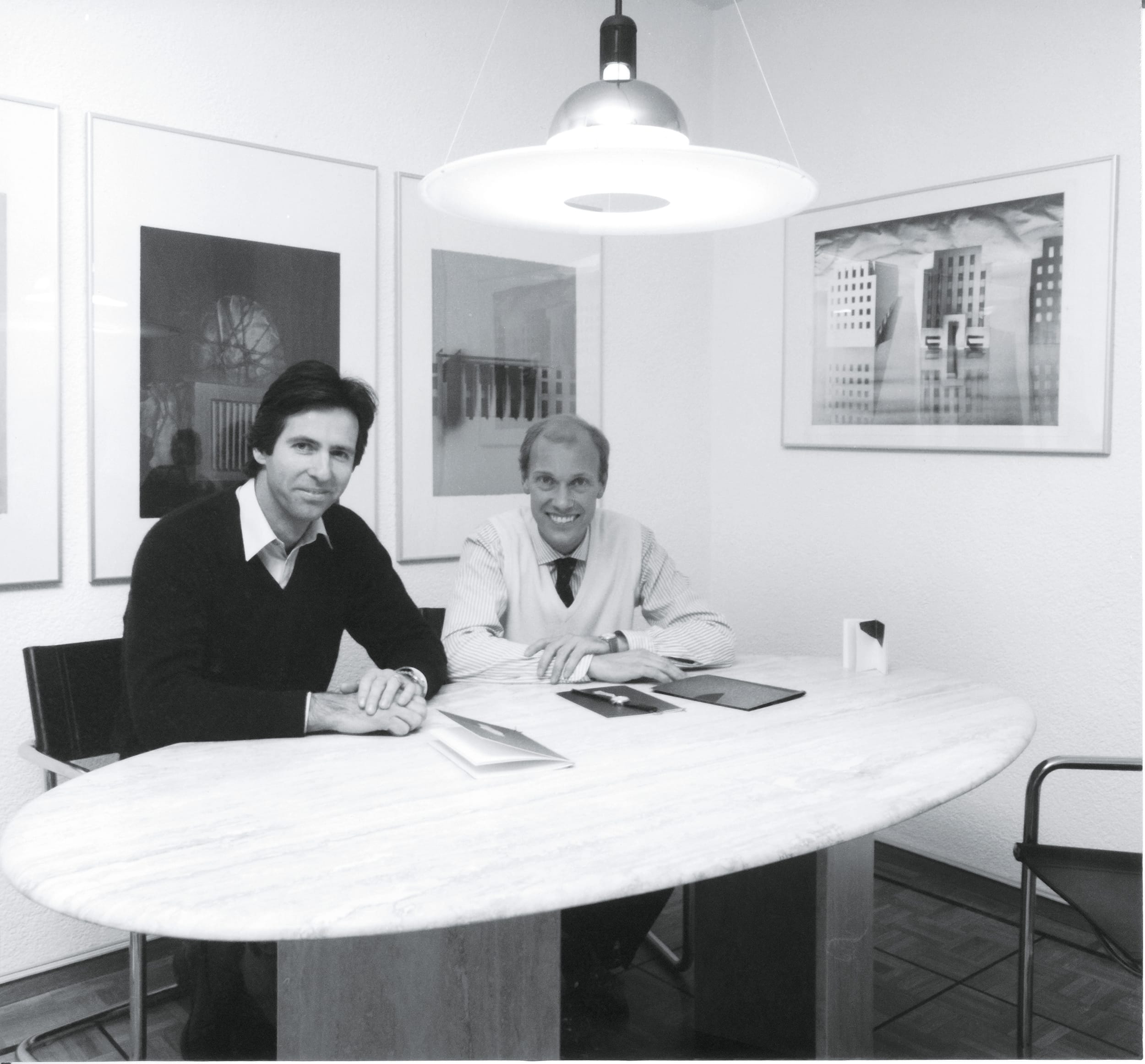
>The fusion of materials, the reliance on celebrities, media events in football, boxing, music, gastronomy, cinema… All of these are now common practice in watchmaking. Does that make you proud, or does it worry you that everyone is still doing the same thing?
It makes me proud to have been present at so many of these developments, to have been a leader. My ambition was always to become a leader, not a follower. I believe that striving to lead is very positive, because it helps you find new ways to define yourself and your work. For me, becoming a leader is something natural—a necessity. Not out of ambition, but because I aspire to lead through ideas, not through hierarchical position. Being a leader is an attitude toward life. It does not mean being first all the time. A leader carries important responsibilities. The first is to help others. The leader who does not help will cease to be one. Only if you give will you receive something in return.
“Eternity has no competition. That is my dream: to eliminate competition. Not because I want to destroy it, but because perfection is extraordinarily rare and difficult to achieve”
>Dozens of new brands are entering the market. It seems easier than ever to create a watch. Do you see genuinely new ideas on the horizon?
At the moment, no. But we are in a kind of revolution. I don’t know how many new brands arrived this year, but it’s an unheard-of number. It cannot continue like this. We cannot have fifteen new brands every year. This creates more possibilities, but will they all survive? We need to analyze, understand, and then act. So I can’t say much more—but no one anticipated so many new brands arriving every year.
>Why did you launch your own brand, and what is the balance sheet after four years as an independent entrepreneur? Is it what you imagined?
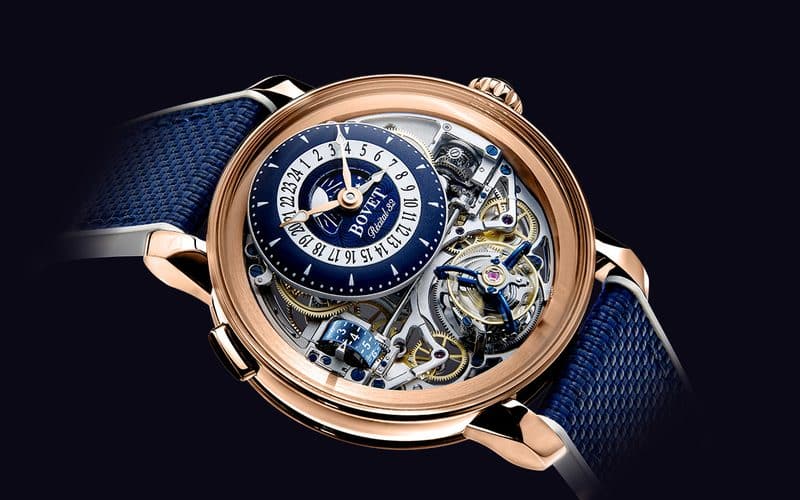
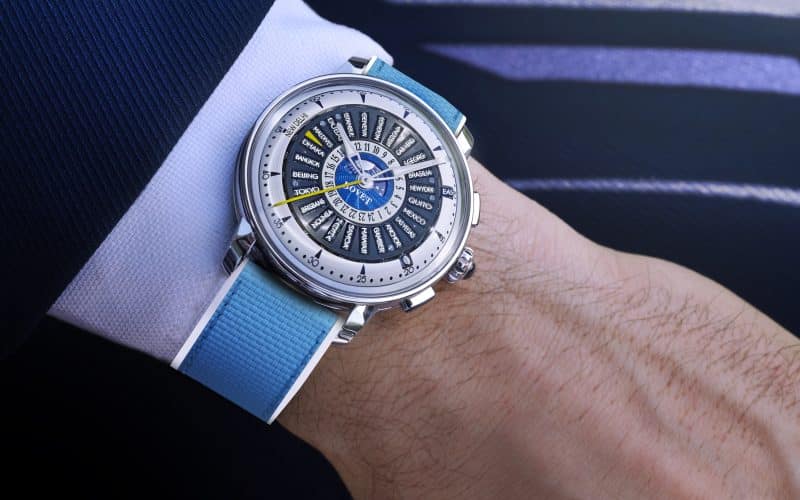
First and foremost, I wanted to promote my son. Because after 52 years of working and influencing this business, the moment came to ask myself what I had actually contributed. And I had to answer: I don’t know. I’ve contributed joy, work, I have hundreds of people who have worked for me—but is it enough? And I thought: no, I should have given more. What else? Have you contributed something spiritual? A theory? A way of life? Something transcendent? I had to return to my workshop and think about what more I could offer. I am in that phase now, together with my son—reflecting on how we can contribute.
I believe the time has come to work with the soul of the watch, with its spiritual dimension. And I know that when one pursues the highest quality, the very best of the best, one approaches eternity—which is perfection. And if one becomes obsessed with perfection as a principle—in decoration, in the regulation of the movement—then one works very close to eternity. And eternity has no competition. That is my dream: to eliminate competition. Not because I want to destroy it, but because perfection is extraordinarily rare and difficult to achieve. It is a lifelong headache. I dream now of perfection, of eternity. If I achieve it, I will have reached what I was looking for.

>With Hublot you were very present in Mexico and Latin America. Did you see something there that other brands and other leaders missed?
That is a very difficult question, because I haven’t seen everything. The market is an animal that never dies. This animal remains alive, and no one has ever managed to tame it or make it a friend. We all try to educate it and dominate it. Art is a difficult animal—and I believe it can only be mastered through spirituality. In my view, that is the best way to approach it. The animal is very sensitive to spirituality, and spirituality is a domain that most people have forgotten. If you observe how people behave, you might fear the future, given how they handle ethics and spiritual life. It is alarming. Today, we all need what the Beatles sang in 1967: ‘All You Need Is Love.’ We could repeat this every day, because it is the greatest need we still carry. We need love as an attitude, as a religion, as a way of behaving. All our projects should be driven by the hope that there is love within them.
>You have spent more than fifty years creating instruments to measure time. At this point in your life, is time a resource, an adversary, or something else entirely?
Time and watches are part of my life. I don’t have many, but they are my passion—which means I have a very special relationship with time, with the art of time. The art of time is not precision. It is life that resides within the watch. A mechanical watch is like a heart. Every second, something happens. It is alive. That is why I vastly prefer a watch with a seconds hand to one without. If my watch has no seconds hand, I don’t really see the time. I don’t even hear it. But when I see the seconds hand moving—tick, tock—then I feel at home. The watch is a special phenomenon for me. It is like magic. How is it possible that this watch works? It was created by people. Not by a computer. That is what excites me: the spiritual dimension we find inside a watch.
>Do you have a watch that is a particular treasure to you?
The watch that became something very special—that has turned into an eternal memory—is the one my grandfather gave me when I was eight years old, to mark my First Communion. My grandfather gave me an Omega Constellation that I put on my wrist that day to go to church, and I loved it. My parents kept it for me and I was not allowed to wear it until I turned eighteen. When they gave it back to me, I put it on one day and went skiing. My mother asked: “Are you going skiing with the watch? You shouldn’t”.
I said: “Mama, it’s fine”—and I went skiing on a glacier at 3,200 meters. When I came back at four-thirty in the afternoon, I had lost it. That is where my story with watches begins: with a great personal defeat. I should have listened to my mother. It is a lesson I will never forget. Perhaps one day, when the glacier melts, someone will find it. For me, it was also a sign: if you don’t follow the rules, you will be punished. That is a lesson I learned from God—and it is probably one of the reasons I have been obsessed with watches ever since.
“Perhaps one day someone will find the watch my grandfather gave me when the glacier melts. For me, it was a sign: if you don’t follow the rules, you will be punished”
>Is there anything you regret, or that you would have done differently in your life or your career?
I regret nothing—except that I should not have sold Blancpain. But because I sold Blancpain and felt remorse, I created my own brand. That is the revenge (laughs). My own brand now gives me satisfaction and helps me forget Blancpain entirely. Today it is no longer in my mind, no longer part of my memories, and I no longer regret it—which was not the case at the beginning. Now, thanks to my brand—which I run with my son Pierre and my family, because I have four family members working in Blancpain… I mean Biver—I know why I sold Blancpain: because I had to, in order to create my own.
>Like closing the circle. Arriving back at the place where you started.
Completely true. You could not have put it better. Brilliant.